
How could we colonise other planets?
Written by Pratyush Joshi ..... 21 November 2024
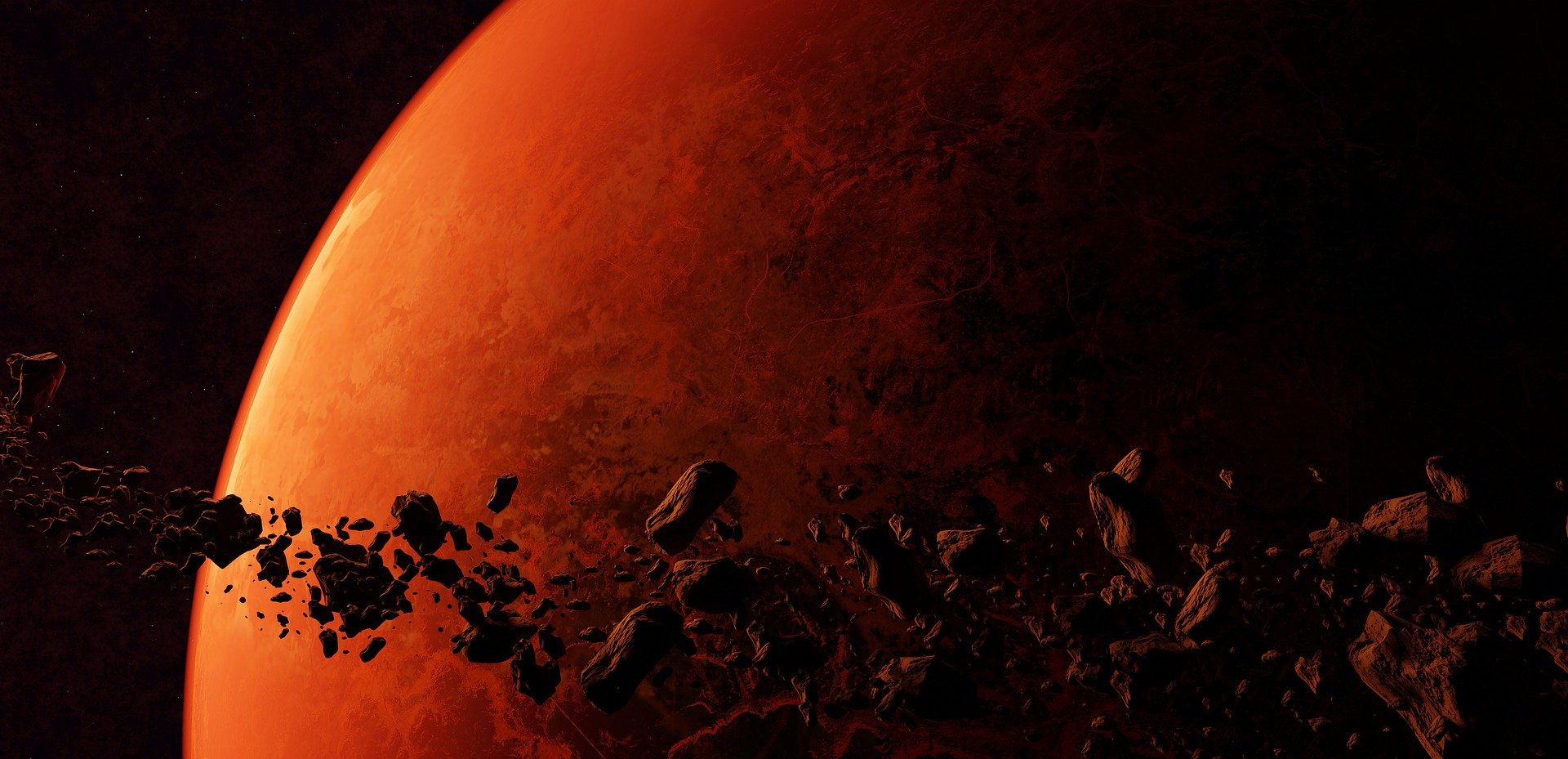
What seems like a far-fetched reality is starting to become a reality - humanity is taking its first steps to settle among the stars. Just recently, SpaceEx had a test of its Starship rocket, despite not attempting to catch the boosters at the launch site. Also, NASA has been running its Artemis project since 2017, with the first launch 2 years ago. Both of these projects have the same aim - to get humans back on the moon (and possibly Mars).
Whilst getting humans back on other celestial bodies is a difficult yet exciting endeavour, a far more exciting and far, far, far more difficult endeavour concerns what these humans should do there, and how to extend the amount of time they can spend on these planets/moons (perhaps indefinitely). I was, of course, alluding to the endeavour of building settlements in space, and colonising planets.
Before delving into some of the engineering aspects and things which you would have to consider before you build such settlements, it is worthwhile to consider the reasons for why we should/want to build such settlements in space - after all, why leave this wonderful planet of ours?
One of the most common reasons given for the need to colonise space, is: the need for a “backup plan”. Climate change, nuclear war, biological pathogens, Carrington events… The list of catastrophic events that could wipe out humanity (or at least a significant proportion of it) is almost endless - and terrifying! Everyone uses backups for their computer files, or has a spare set of keys, so naturally, we should have a separate civilisation on a completely different planet. That way, in the event that anything happens to this world, we can minimise the risk of the extinction of humanity, as we, or our descendents, would be somewhere out in the universe, even if the planet from which we originated was not.
Another reason for having space colonies is to exploit the wealth of precious resources that exist in space. The asteroid belt is rich in many precious metals in far higher concentrations than on Earth (as seen here). If we could somehow set up an asteroid mine and refinery in space, we would be able to extract these metals, without destroying the Earth’s natural environment in much higher quantities than we can. This will democratise access to precious metals (as they won’t be as “precious” anymore), which can lead to greater innovation, as these metals are often used in technology. Furthermore, this will mean that we can avert the impending crisis of running out of precious metals, which would not allow us to use the technology that we depend upon to live our modern lives.
The third reason for having space colonies is simply the exploration of space. It has always been human nature to explore the unknown and expand our frontiers. Since we have already conquered most of the Earth (excluding the depths of the oceans, which are still fascinatingly mysterious), the next logical step is to turn to space. Also, by having a space colony, we can launch ships from it at a lower cost and lower fuel requirement than launching rockets from Earth (due to the lower gravitational field strength) which would allow us to increase the rate of exploration. In other words, first getting to space is the hardest part; once we are in space we can rapidly begin to expand.
Now that we have discussed some of the motivations behind building a space base, it's time to discuss how you would go about building one, and what challenges you would encounter.
The first problem that you would be faced with, is a “what” question: what can you build a space base out of? There are 2 main approaches to solve this problem - either, we somehow transport material from Earth and use that to build in space, or we use what is already in space to build our colony. The disadvantages with the former are clear to see: there would be an immense cost with simply getting the materials into space, and it would require lots of fuel. Also, the cost of the materials themselves would be eye-watering, as in order to make a settlement, we would need lots of it - from building materials, to life supporting chemicals, such as water and oxygen. We can now explore the latter method - using materials that are already in space. One method of doing this is asteroid mining, which was mentioned earlier. However, asteroid mining itself (as with anything) would require at least some materials, which means we will still have to move some materials into space, however it should be cheaper than transporting all the materials into space. Another method we can employ is building from the materials available on the surfaces of Mars and the moon. The surface of Mars is covered in a substance called regolith. In order to use it for building, we could melt it down to make steel, or to mix it with sulfur to create an aggregate that we can use to make concrete (as seen here). One more method is using fungi to grow building blocks, which can be used on other planets. This is still an area of active research, and is what the idea for our CanSat was based on. By doing this, we would avoid needing to use energy in heating up the regolith, and would create a lightweight material which can be easily transported (as seen here).
Another challenge to building a space base is: how will it be built. It is quite clear that it will be logistically hard to simply take an already built settlement up to space, so we need to build it there. The problem is that there is no one in space to build it, and if we want people in space to build it, then those people must have somewhere to build. This is quite problematic, as we are stuck in a circular loop, as there needs to be some infrastructure before humans start arriving to build in space. One idea is to have robots build the initial infrastructure, and then humans can come to take over. This, however, not only requires significant advances in space technology, but also advances in robots. Whilst companies such as Boston Dynamics have already begun making robots that are able to traverse harsh environments, and are working on humanoid robots, we are still far away from having robots build something on earth - let alone another planet. Therefore, whilst it is not outside the realms of possibility, it will take us some time before we reach this level, and is one of the main factors which will need to be solved in order for us to successfully begin our colonisation of space.
The third challenge we will have to overcome is physiological. Humans (and other animals) did not evolve in space. We’ve evolved to live on Earth, in a relatively strong gravitational field - compared to the places which we want to colonise, in an abundance of oxygen, and our circadian cycle is even adapted to the day/night cycle. Whilst the ISS shows that it is possible for humans to survive in space, it can hardly be said to be very comfortable - astronauts have to exercise constantly to maintain the bone structure, and the longest someone has been in space is only 437 days, which may sound to be quite long, however we would expect that people should be able to live in our settlements for much longer than a year - perhaps decades, perhaps their entire life - yet we do not have any evidence for what such a long time in space could do to someone. In addition to this, as the places we are keen on settling down in have no atmosphere, it increases the radiation exposure massively. This would lead to increased risk of cancer, and would mean that people may not be allowed outside of a controlled habitat, which would be quite a miserable existence. It would only be possible to have a settlement on another planet which people would actually want to live on if they weren’t confined to one building for the rest of their lives (remember how bad the lockdown was?) and the only way to do this whilst ensuring relative safety is either making people wear suits which could withstand the cold and the radiation, or terraforming the planet, which is even more infeasible than building a space settlement. However, even if you could terraform the planet, and get its core started again to create a magnetic field that reflects the radiation, and somehow make sure that the atmosphere does not escape, the biggest challenge is still gravity. Even though we know that humans can survive (at least for a limited time) without gravity, it is still unclear how important gravity is to the development of babies and children. It could be that on a planet with significantly lower gravity, there could be problems with the growth of children, and problems with the skeletal and muscular structures. Unlike the other factors, there is no plausible method to overcome gravity. This means that it would be impossible to have a purely sustainable space civilization, as it may be impossible for children to be born safely in space.
In conclusion, we have explored some of the reasons why we want a space base, and we have also explored some engineering challenges which will arise when going to build the space base. Despite these challenges, which seem impossible, humanity has overcome the impossible before. Hundreds of years ago, going to space was not even considered as realistically, yet we accomplished that. Perhaps in a hundred years, we will also achieve the impossible of building space outposts on other planets. To do this, it will require advances in all areas of science and engineering, from efficient rocket fuels, to a greater understanding of the effects of gravity (and lack thereof) on bodies in space, to the development of dextrous robots that can build structures. Hopefully, in this modern space age, we will begin to lay the foundations for future generations to build on.
Links of interest:
- Donald Trump and Elon Musk watch SpaceX launch Starship rocket - BBC News
- Asteroid Mining Could Solve Rare Metal Shortage | Manufacturing.net
- NASA - Take or Make in space refs final
- NASA Advances Research to Grow Habitats in Space from Fungi - NASA
- Can we build skyscrapers on Mars?
- Home | Boston Dynamics